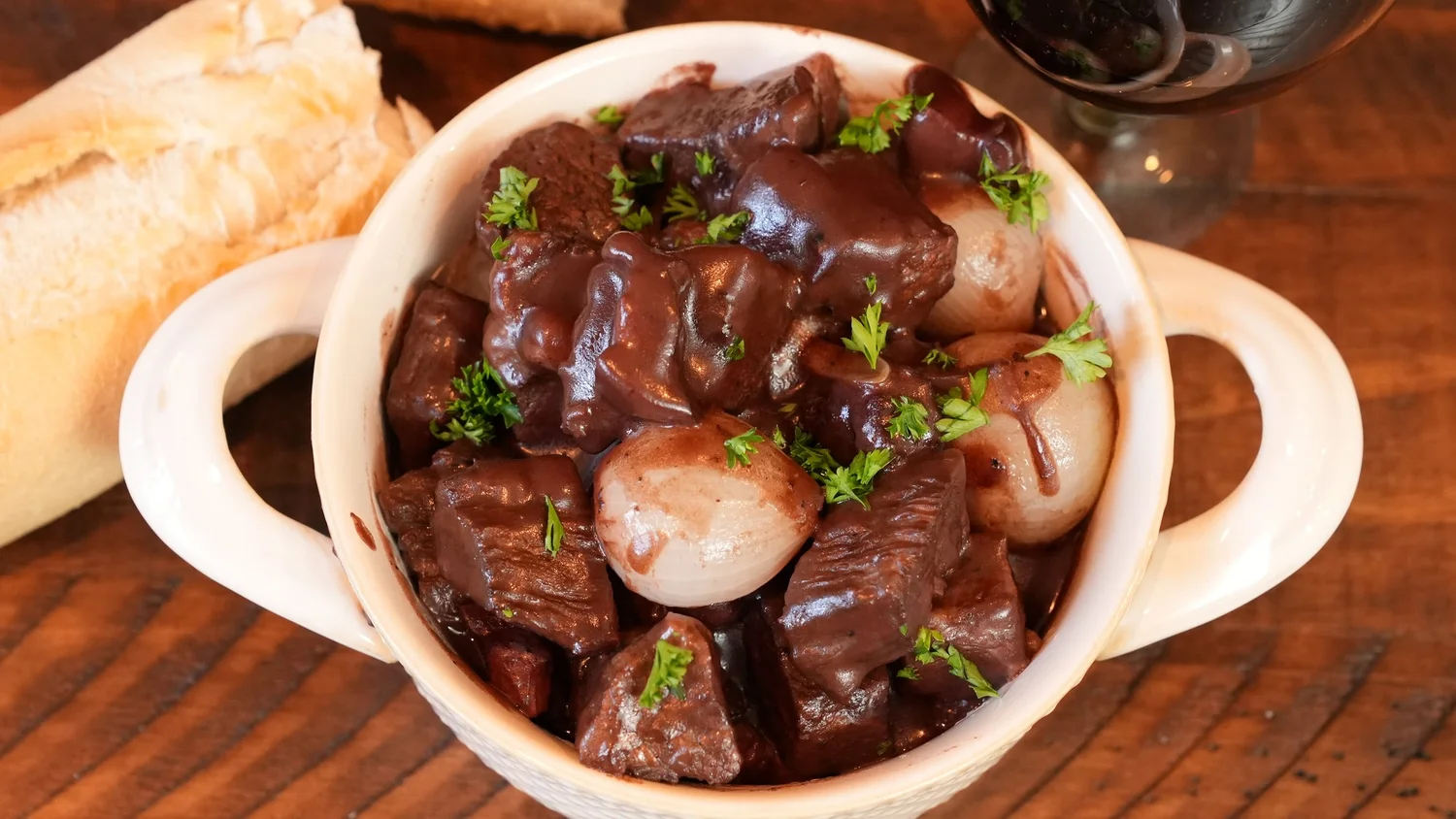
The culinary world is rich with dishes that tell stories of heritage, ingenuity, and a deep love for food. Few exemplify this more profoundly than Beef Bourguignon. This iconic French beef stew, hailing from the Burgundy region, is a symphony of flavors and textures – fork-tender beef, rich red wine, smoky bacon, and earthy vegetables, all melded into a velvety sauce that speaks of comfort and sophistication. More than just a meal, Beef Bourguignon is an experience, a journey into the heart of French country cooking that has captivated palates worldwide for centuries.
While its name might suggest a complex undertaking, the true beauty of beef bourguignon lies in its elegant simplicity and the magic that happens when humble ingredients are given time and care. It’s a dish that transforms inexpensive cuts of beef into something utterly luxurious, proving that patience is indeed a virtue in the kitchen. Join us as we uncover the fascinating history behind this masterpiece and reveal the essential secrets to achieving its signature deep, unforgettable French flavor.
A Culinary Journey Through Burgundy: The History of Beef Bourguignon
To truly appreciate Beef Bourguignon, one must first understand its roots. This celebrated stew isn't just a random concoction; it's a direct reflection of its birthplace: Burgundy (Bourgogne) in east-central France. This region is renowned globally for two things above all others: its exceptional Pinot Noir and Chardonnay wines, and its rich, hearty cuisine. It’s no coincidence that the dish incorporates both.
Traditionally, Boeuf Bourguignon was a peasant dish. In an era before refrigeration and readily available prime cuts, cooks had to be ingenious. Tougher, less expensive pieces of beef, like chuck, were all that was often available. The solution? Long, slow braising. By simmering these cuts for hours in the local red wine, along with vegetables and aromatic herbs, they transformed from chewy to exquisitely tender and incredibly flavorful. The wine wasn't just a liquid; it was a powerful tenderizer and flavor enhancer, infusing the meat with its complex notes and helping to break down connective tissues.
While the concept of beef stew braised in wine likely existed in Burgundy for generations, its rise to international stardom largely coincided with the culinary revolution of the 20th century. The undeniable catalyst for its global renown was none other than the legendary American chef and author, Julia Child. Through her groundbreaking cookbook, "Mastering the Art of French Cooking," and her beloved television show, Child brought this rustic French masterpiece into American homes. She demystified French cuisine, making dishes like The Best Beef Bourguignon Recipe: Master This French Classic glamorous yet approachable. Julia Child’s version became an icon, solidifying beef bourguignon's status as a quintessential French classic—a dish that felt both refined enough for special occasions and comforting enough for a family meal.
Today, while many versions exist, including streamlined Easy Beef Bourguignon: Achieve Tender Beef with Red Wine Sauce, the essence remains the same: a testament to transforming humble ingredients into something truly magical through time and respect for flavor.
The Anatomy of Deep Flavor: Essential Ingredients & Their Roles
The extraordinary depth of flavor in Beef Bourguignon isn't accidental; it's meticulously built, layer by layer, starting with carefully selected ingredients. Each component plays a vital role in creating that signature rich, savory experience.
The Star of the Show: Beef Chuck
The choice of beef is paramount. While any beef stew needs good meat, beef bourguignon truly shines with beef chuck. This cut, taken from the shoulder, is ideal because it contains a good amount of marbling and connective tissue. While tough when raw, these elements break down during slow cooking, rendering the meat incredibly tender and succulent, and enriching the sauce with a silky texture from the gelatin released. It’s crucial to cut the beef into uniform pieces, about 1 ½ to 2 inches, to ensure even cooking.
The Soul of the Stew: Red Wine
The "Bourguignon" in the name isn't just for show; it dictates the wine. A good quality Burgundy red wine (Pinot Noir) is traditional and highly recommended. The wine isn't merely a cooking liquid; it's a primary flavor component, contributing acidity, fruitiness, and tannins that balance the richness of the beef and bacon. A common mistake is using "cooking wine" – avoid it! If you wouldn't drink it, don't cook with it. A decent Pinot Noir will elevate the entire dish, imparting a complex, nuanced flavor that can't be replicated.
The Aromatic Foundation: Bacon, Onions, Carrots, Garlic
- Bacon (Lardons): Start with good quality slab bacon or thick-cut bacon, diced into lardons. Rendering the bacon not only provides a delicious, smoky flavor but also creates the foundational fat for sautéing the other aromatics. Don't discard the crispy bacon bits; they're a delightful garnish or can be stirred back in.
- Onions & Carrots: These classic mirepoix vegetables are the unsung heroes. Sautéing them slowly in the bacon fat sweetens them, deepening their flavor and creating a savory base. They melt into the sauce over time, adding body and a subtle earthy sweetness.
- Garlic: A few cloves of fresh garlic, minced and added to the sautéing vegetables, provide an essential aromatic punch that brightens the overall flavor profile.
The Supporting Cast: Mushrooms & Pearl Onions
While often added later, these elements are key to the complete beef bourguignon experience. Sautéed mushrooms (cremini or button) bring an earthy umami depth, while sweet pearl onions, often added towards the end of cooking, provide a burst of mild onion flavor and a delightful texture contrast.
Mastering the Technique: Secrets for an Unforgettable Beef Bourguignon
Beyond the ingredients, it's the techniques that truly unlock the magic of Beef Bourguignon. These aren't complicated, but they require attention to detail and patience.
Low & Slow Braising: The Magic of Time
This is arguably the most critical technique. Braising involves searing meat at high heat, then simmering it in a liquid (like wine and broth) in a covered pot over low heat for several hours. This process gently breaks down the tough connective tissues in the beef, transforming it into melt-in-your-mouth tenderness. Rushing this step will result in chewy beef and a less integrated sauce. The beauty of a slow-cooked stew is that the flavors have ample time to meld and deepen, creating a harmonious and complex final dish.
The One-Pot Wonder: Your Dutch Oven
A heavy-bottomed Dutch oven is non-negotiable for authentic beef bourguignon. Its superior heat distribution prevents scorching and ensures even cooking. The ability to brown the beef, sauté vegetables, deglaze the pot, and then braise all in the same vessel not only builds incredible layers of flavor (thanks to all those delicious browned bits at the bottom) but also minimizes cleanup. Look for a sturdy cast-iron enamel Dutch oven for best results.
The Maillard Reaction: Browning for Flavor
Before any braising begins, the beef must be properly browned. This isn't just for aesthetics; it's about flavor. The Maillard reaction, a chemical process that occurs when amino acids and reducing sugars react at high temperatures, creates hundreds of new flavor compounds, giving the beef a rich, savory, and complex taste. The secret to effective browning is to dry the beef thoroughly and brown it in small batches. Overcrowding the pot will lower the temperature, causing the meat to steam instead of sear, and you'll miss out on that crucial flavor development.
Building the Silky Sauce: A Chef's Trick
A hallmark of great beef bourguignon is its luxurious, velvety sauce. While some recipes call for making a traditional roux or adding a beurre manié, a fantastic way to achieve a silky, lump-free gravy is to dust the browned beef with flour before adding the liquids. The flour adheres to the meat, then slowly thickens the sauce as it simmers. Some chefs even prefer to strain the sauce towards the end of cooking, allowing it to cook for hours without clumping, resulting in an incredibly smooth consistency without any raw flour taste.
Resting and Reheating: Enhancing the Experience
Like many stews, beef bourguignon often tastes even better the day after it's made. This is because the flavors continue to meld and deepen as the stew rests. If you have the time, make it a day ahead. When reheating, do so gently on the stovetop over low heat, stirring occasionally, or in a low oven, to preserve the tender texture of the beef and the integrity of the sauce.
Serving Suggestions & Enjoying Your Masterpiece
Once your Beef Bourguignon has simmered to perfection, the moment of truth arrives. This rich, comforting dish is incredibly versatile when it comes to serving. Classic accompaniments include creamy mashed potatoes, which are perfect for soaking up every last drop of that glorious red wine sauce. Crusty French bread is another excellent choice for the same reason, offering a delightful textural contrast. Boiled potatoes or even wide egg noodles (tagliatelle) also make wonderful pairings.
To complete the authentic French experience, consider a simple green salad with a light vinaigrette to cut through the richness. And, of course, pair your meal with a good bottle of the same Pinot Noir you used in the stew – it will harmonize beautifully with the flavors.
Conclusion
From its humble beginnings as a peasant dish in the heart of Burgundy to its elevated status as a global culinary icon, Beef Bourguignon embodies the timeless appeal of French cuisine. It’s a dish that celebrates quality ingredients, honors the art of slow cooking, and rewards patience with unparalleled depth of flavor. While the journey to create it might seem elaborate, the secrets lie in simple, logical steps: selecting the right cut of beef, embracing good wine, building layers of flavor with aromatics, and allowing time to work its magic through gentle braising.
Mastering this French classic isn't just about following a recipe; it's about understanding the "why" behind each step. With these historical insights and culinary secrets, you’re now equipped to create a Beef Bourguignon that will not only tantalize taste buds but also tell a story of tradition, comfort, and deep French flavor. So, grab your Dutch oven, uncork that Pinot Noir, and embark on your own delicious journey with this truly magnificent stew.
